01
Laptop + phone
Shared, practical devices for planning, learning, communication and market access.
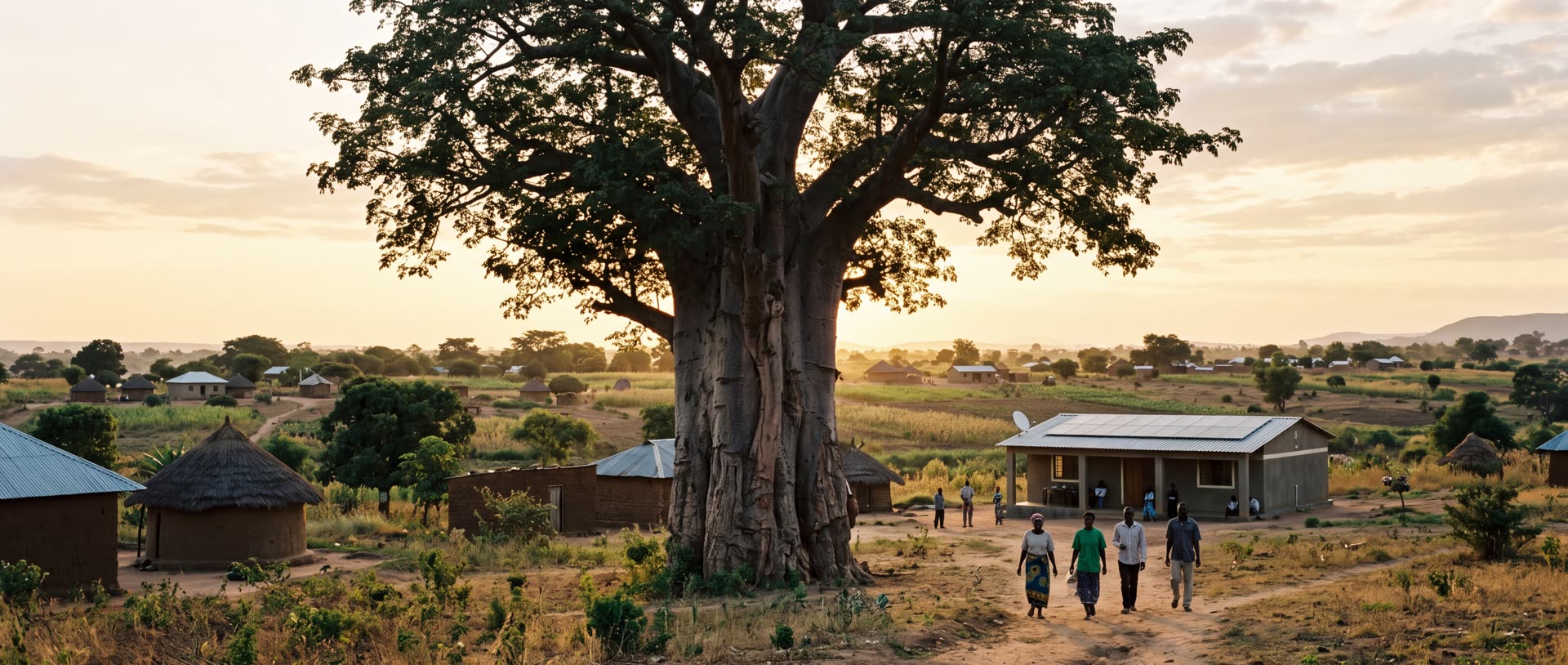
Help 15 families use locally governed AI, reliable infrastructure and catalytic capital to build livelihoods on their own terms—and make nourishing food more reliably available to their children.
We are not building another system that delivers answers to communities. We are building tools that help communities create and act on their own answers.
A practical bundle of tools, access and support—not a magic box. Each component is selected for the local setting and governed with participating families.
Shared, practical devices for planning, learning, communication and market access.
Internet access where technically and regulatorily feasible, including satellite options where appropriate.
A suitable, locally tested decision-support model with human oversight—not an autonomous decision-maker.
Solar infrastructure where required, with maintenance and safe local operation built into the pilot.
Small, accountable capital aligned with the livelihood plans families choose and test.
The first pilot begins with a simple belief: a child’s future should not narrow because opportunity, information or a route to market stops miles away.
Concept film using fictional AI-generated people. Any field production will require informed consent, child safeguarding, privacy protection and fair compensation.
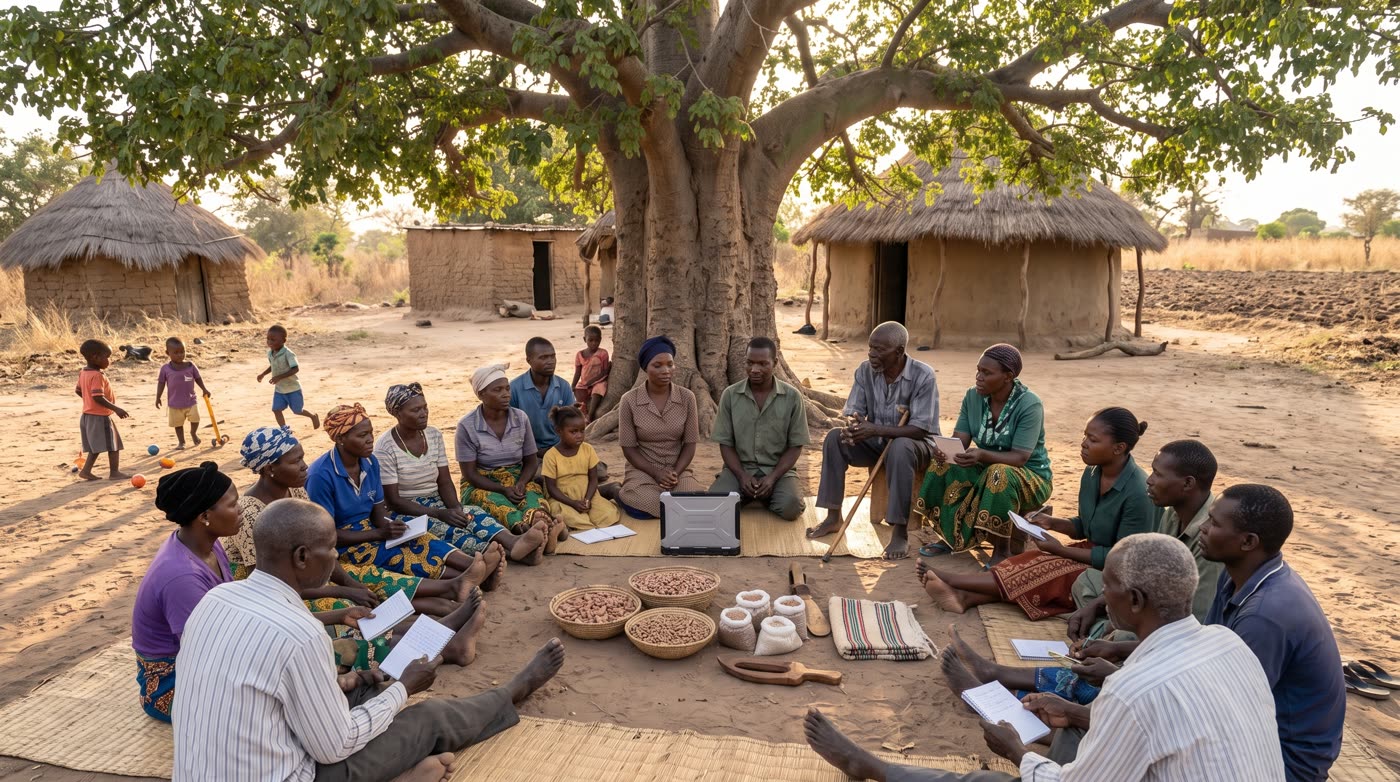
This proposed rural Ghana pilot will work with one cohort of 15 families. The precise community and local delivery partners will be confirmed through due diligence before deployment.
Co-design with local stakeholders, select appropriate tools, establish safeguards and begin voluntary livelihood planning.
Support family-selected entrepreneurship and food-production plans; track learning, costs, risks and early outcomes.
Independently assess results, publish limitations and determine what—if anything—should be adapted or scaled.
Devices, power, feasible connectivity and maintenance.
Facilitation, training, coordination and community participation.
Accountable catalytic support for family-selected plans.
Privacy, monitoring, evaluation, documentation and independent review.
Planning target, not a finalized procurement budget. Exact allocations will be published after local partner selection, site assessment and community co-design. No fabricated precision; no hidden promise.
baobab’s ambition is to help make poverty and child food poverty history. The first pilot’s job is not to declare victory. It is to learn whether this model can create measurable value for participating families.
children under five were estimated to live in severe child food poverty in 2024.
UNICEF source ↗children under five in Africa were estimated to live in severe child food poverty.
UNICEF source ↗of people living in extreme poverty were in Sub-Saharan Africa in the World Bank’s 2024 regional estimate.
World Bank source ↗Access to support must never depend on unnecessary financial disclosure.
Purpose limits, role-based access, retention rules and accessible correction or deletion.
Local facilitators and participating families retain context, explanation and appeal.
Community involvement in design, permitted data use, implementation and evaluation.
No exploitative storytelling and no identifiable child data unless strictly necessary.
Publish outcomes, costs, limitations and failures before making broader claims.
Tell us the amount you may be willing to fund. This is a non-binding expression of interest—not a payment or legal commitment.
Enter a concrete amount and how you would like us to follow up.
baobab is being designed as a mission-led social enterprise. The final legal and funding structure must be established and disclosed before any binding contribution is accepted. This page currently collects only non-binding interest.
No. The model is decision support: it may help compare options, map seasonal income and expenses, and surface questions. Families choose their plans, with local human facilitation and a clear ability to disagree or opt out.
No. Connectivity is site- and country-specific. Satellite internet is one option subject to current availability, licensing, affordability and technical assessment. The pilot will use the most appropriate feasible connectivity.
Success criteria will be co-designed and baselined before launch. They may include livelihood stability, progress on family-selected enterprise or food-production goals, service reliability, adoption and child dietary-diversity indicators. Causality and limitations must be evaluated honestly.
Yes. The planning requirement is $10,000 per year for three years. Use the pledge form to state whether you are considering one-time, annual or targeted support.
No partnership is claimed. Local-partner and last-mile distribution models documented by organizations such as Kiva have informed the concept, but baobab must build and validate its own partnerships.
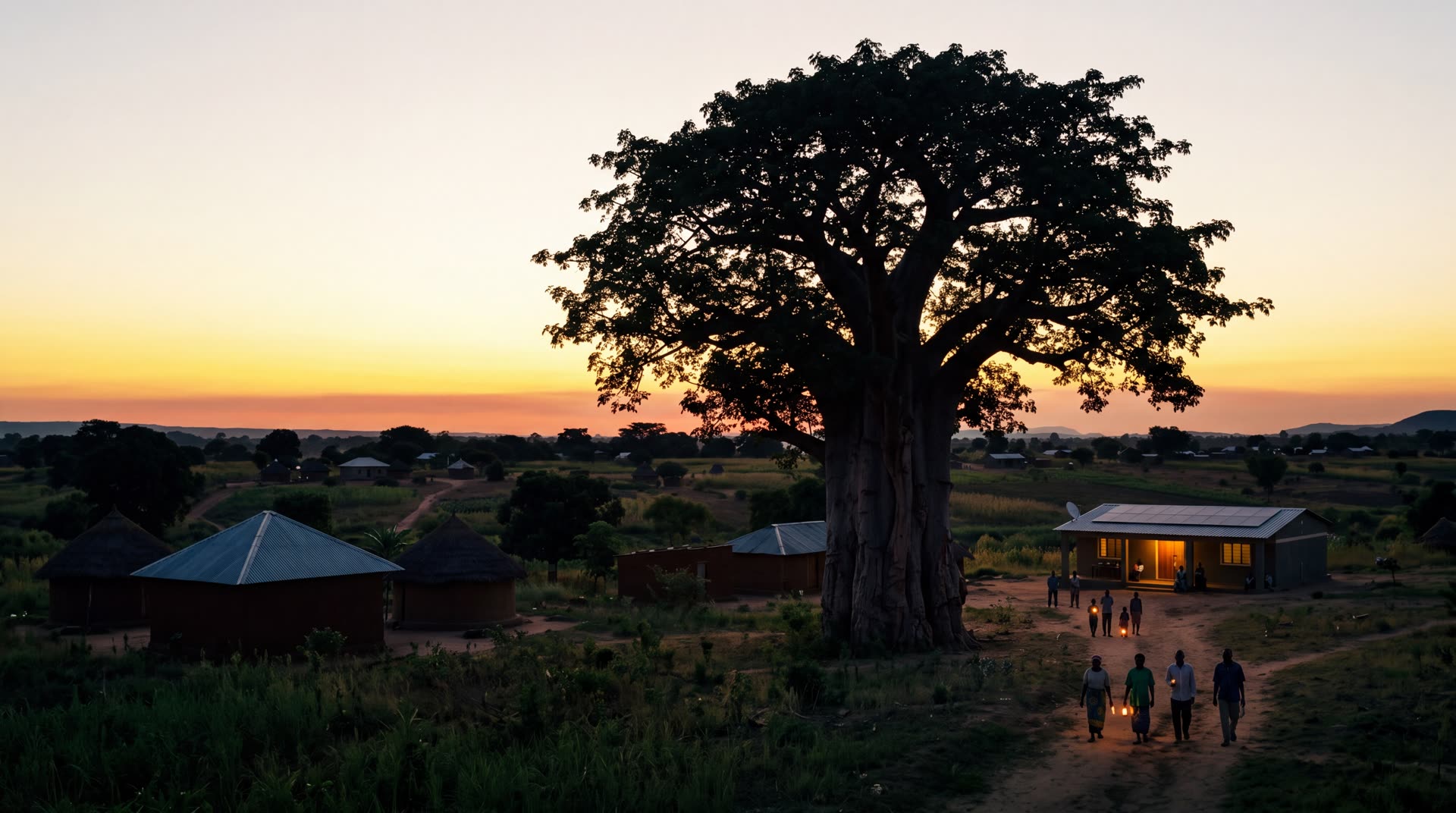
Help finance three years of accountable learning with 15 families in rural Ghana.
Make a non-binding pledge →